
1. Introduction
Electronic devices have a trend of miniaturization. Powerful compact electronics pose a challenge for designers managing heat dissipation.
Traditional cooling methods do not cope well with heat density. As a result, the industry is progressively implementing vapor chamber technology.
A vapor chamber improves cooling and system stability by spreading heat over a larger surface area.
Currently, vapor chambers are important to the function of GPUs, AI servers, data centers, smartphones, and electric vehicles.
With the global demand for AI and high-performance computing, that list is sure to grow.
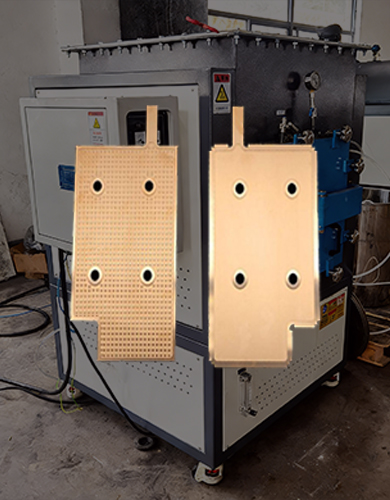
Bangwin Machine provides high-quality, modern manufacturing systems for the production of vapor chambers and heat pipes.
👉 To see more of what thermal manufacturing solutions we have to offer, go to https://thermalmachinery.com/.
2. What Is a Vapor Chamber?
A vapor chamber is a two-dimensional heat transfer device that uses phase-change technology to transfer heat.
A heat pipe and vapor chamber function on very similar principles, the key difference being that heat pipes only transport heat in one dimension.
A vapor chamber is often made of:
- Copper chamber body
- Internal wick structure
- Working fluid
- Vacuum environment
Once heat is introduced into the system, the working fluid is quickly vaporized.
The vapor then travels throughout the chamber.
The vapor will then condense in the cooler regions of the chamber.
The wick is then responsible for transporting the working fluid back to the heat source.
This is all done passively and requires no additional power.
3. How a Vapor Chamber Works
Four distinct steps define the operation of a vapor chamber.
Heat Absorption
When heat interacts with the vapor chamber, the evaporator section will absorb the heat.
Vapor Generation
The working fluid is then vaporized.
Heat Distribution
This vapor then is used to transport the heat throughout the chamber.
As a result, heat moves uniformly across the surface.
Condensation and Return
The vapor condenses in the cool areas.
Then, the wick structure moves the liquid back.
Thus, continual thermal flow is sustained by the vapor chamber.
4. Structure of a Vapor Chamber
The design includes several elements that impact function.
- Chamber Shell
Copper is a common choice because of its advanced thermal conductivity.
- Wick Structure
Wick structure supplies capillary action.
Thus, the liquid can flow back to the evaporation zone.
Common wick types are:
Sintered powder wick
Mesh wick
Grooved wick
Working Fluid
The selection of working fluid is based on the temperature of operation.
The usual choices are:
Water
Methanol
Acetone
Vacuum Environment
The boiling point is lowered in a vacuum, and thus, heat transfer is simplified.
5. Vapor Chamber vs Heat Pipe
Many engineers compare vapor chambers and heat pipes.
Feature | Vapor Chamber | Heat Pipe |
Heat Spreading | Excellent | Good |
Cooling Area | Large Surface | Linear Transfer |
Thickness | Very Thin | Variable |
GPU Cooling | Excellent | Good |
AI Server Cooling | Excellent | Good |
Cost | Higher | Lower |
For advanced high-power applications, vapor chambers typically outperform heat pipes. However, heat pipes are perfect for most standard cooling systems. For manufacturers who make both products, the optimal solution is to have both a Heat Pipe Production Line (internal link keyword) and a Vapor Chamber Production Line (internal link keyword).
6. Advantages of Vapor Chamber Technology
- Better Heat Distribution
Heat is distributed evenly throughout the vapor chamber.
Therefore, hot spots are virtually eliminated.
- Cooling Efficiency is Improved
Since heat transfer is enhanced, devices can operate at a lower temperature.
- Space-Saving Design
Vapor chambers achieve advanced cooling in a small, confined space.
- Greater Reliability
Since vapor chambers operate at lower temperatures, the components have a longer life.
- Support for High-Power Devices
Vapor chambers can easily handle the higher thermal loads and, therefore, are applicable for the newer computing technologies.
7. Vapor Chamber Production Process
Vapor chamber manufacturing is highly controlled and involves a number of steps.
The Process begins with copper plates being prepared and cleaned of any surface contaminants.
Next, the wick structure is inserted, and wick structure is reinforced by a process known as sintering.
After this, primary and secondary degassing systems with a six-station vacuum degassing system create the required vacuum.
The Working Fluid is then injected, followed by a permanent seal of the chamber by a welding system.
To complete the process, thermal performance and leak testing is conducted.
To achieve production goals, modern manufacturing facilities utilize a complete Vapor Chamber Production Line (internal link keyword).
8. Vapor Chamber Uses
- GPUs and Graphics Cards
The heat generated by modern day GPUs is substantial. For this reason, vapor chambers provide an enhanced cooling solution.
- AI Servers
Vapor chambers are utilized for the continuous thermal management required by AI workloads.
- Data Centers
Data centers require more energy efficient cooling.
Thus, the use of vapor chambers is on the rise.
- Gaming Laptops
Vapor chambers allow manufacturers to design thin laptops and enhance performance.
- Smartphones
Vapor chamber cooling leads to better performance for longer in premium smartphones.
- Electric Vehicles
Vapor chambers help with the reliability and efficiency of the power electronics and battery systems with thermal management.
Future Trends in Vapor Chamber cooling
The following trends will help continue increasing the use of vapor chambers:
The Expansion of Artificial Intelligence
AI servers push the limits for more cooling.
High Density Data Centers
Vehicular cooling continues to be a challenge in the design of EVs
Miniaturized Electronics
Devices continue to become smaller and more powerful.
The demand for vapor chambers will continue to rise.
Why Choose Bangwin Machine
We are a thermal manufacturing equipment and turnkey production systems specialist.
We manufacture:
- Vapor chamberproduction lines
- Heat pipe production lines
- Vacuum degassing machines
- Automated assembly systems
- Tailor made solutions
We also do:
- Factory layouts
- Installation of machines
- Assistance with machines
- Optimizing processes
👉 Visit https://thermalmachinery.com/ to see our thermal manufacturing solutions.
- For more industrial manufacturing insights:
- https://thermalmachinery.com/
9. FAQ
- What is a vapor chamber?
A vapor chamber is a flat device that uses phase-change technology to transfer and distribute heat.
- How does a vapor chamber work?
The working fluid evaporates and transfers heat as vapor. It then condenses and returns through the wick.
- Is a vapor chamber better than a heat pipe?
A vapor chamber is better at spreading heat for large heat sources and for high-power applications.
- Where are vapor chambers used?
Vapor chambers can be found in GPUs, AI servers, gaming laptops, smartphones, data centers, and EVs.
- How are vapor chambers manufactured?
Manufacturing steps involve cleaning, wick insertion, vacuum degassing, fluid filling, welding, and testing.
10. Conclusion
Vapor chambers are one of the most advanced thermal management systems available.
They are compact and reliable while having the best performance for heat spreading.
This is why more and more companies are using vapor chamber cooling in high-performance electronics.
The demand for vapor chambers will also increase as AI computing and data centers continue to grow and especially as electric vehicles become more popular.
Bangwin Machine provides a full manufacturing system for vapor chambers as well as for the thermal management system across the globe.
👉 Go to https://thermalmachinery.com/ to see advanced vapor chamber manufacturing technology with turnkey systems for production.