
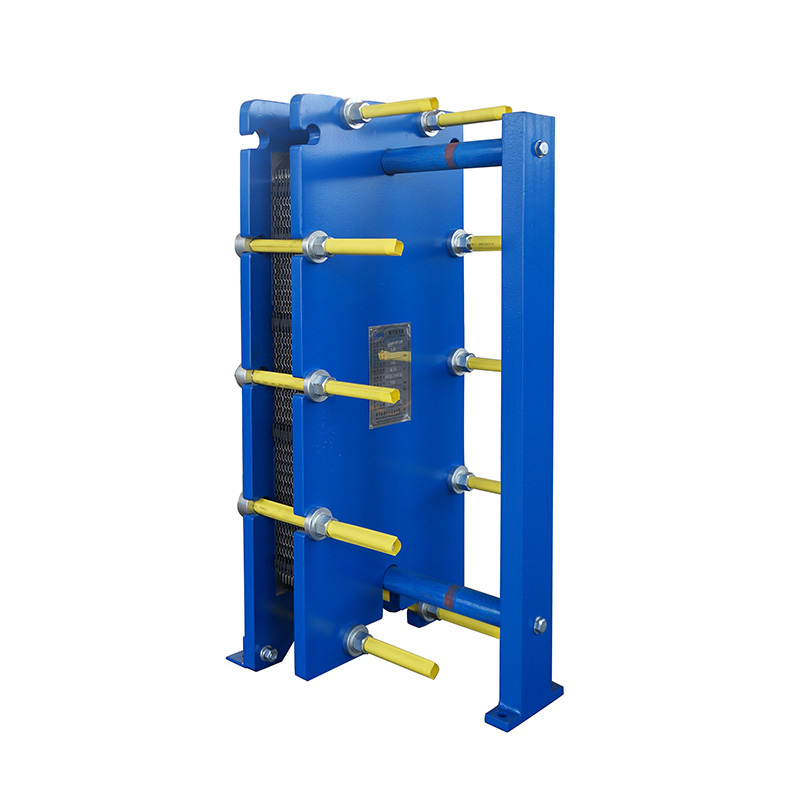
A plate heat exchanger transfers heat between two fluids through thin plates while keeping the fluids separate. Its corrugated plates create a large heat-transfer surface in a compact footprint, making this equipment useful for heating, cooling, heat recovery, and selected condensation duties. The right design depends on the fluids, operating temperatures, pressure, flow rates, fouling risk, materials, and maintenance requirements. For many clean liquid-to-liquid duties, a plate heat exchanger can reduce equipment footprint, although the result depends on the specified duty.
1. What Is a Plate Heat Exchanger?
A Plate Heat Exchanger (PHE) is a thermal device that transfers energy between two fluid streams without normally mixing them. A stack of thin, patterned plates creates alternating channels for the hot and cold fluids. Heat crosses the plate walls, while the channels keep each stream separate.
The plates usually have corrugated patterns. These patterns increase the effective heat-transfer area and promote fluid movement across the surface. However, stronger turbulence can also increase pressure drop, so designers must balance heat-transfer performance against pumping requirements.
A plate unit can serve as a heating exchanger, cooler, heat-recovery unit, evaporator, or condenser, depending on its construction and operating conditions. It does not create heat; it moves heat from one stream to another. The required duty, fluid properties, and temperature program determine the design.
2. How Does a Plate Heat Exchanger Work?
The operating principle is straightforward: a temperature difference drives heat from the hotter fluid to the colder fluid through a conductive plate wall. The two streams travel through separate channels, often in counter-current flow.
In a gasketed plate-and-frame design, gaskets direct each fluid into alternating channels. The plate pack sits between a fixed frame plate and a pressure plate. Tightening bolts compress the pack to create the seals. In brazed designs, a brazing material joins the plates and removes the need for replaceable gaskets. Welded designs use welded joints for duties that need a different pressure, temperature, or media-handling envelope.
The heat-transfer rate depends on several linked variables: heat-transfer area, overall heat-transfer coefficient, and the effective temperature difference. Flow distribution, plate geometry, fluid viscosity, deposits, and material conductivity also affect performance. Therefore, a supplier needs process data rather than only the desired outlet temperature. A plate heat exchanger performs best when the designer balances heat-transfer area with acceptable pressure drop.
Counter-current flow usually supports a closer temperature approach than parallel flow. In practical terms, the two outlet temperatures can approach each other more closely when the duty and design allow it. Still, the result depends on the actual fluids, flow rates, and exchanger configuration.
For a useful overview of the working principle, see Alfa Laval’s plate heat exchanger explanation.
3. What Are the Main Types?
No single construction suits every process. Choose a design based on cleanability, pressure and temperature limits, media compatibility, footprint, and lifecycle cost.
Type | Typical construction | Main strengths | Important limitations |
Gasketed plate-and-frame | Corrugated plates, replaceable gaskets, bolted frame | Easy access for inspection, cleaning, and capacity changes | Gasket compatibility and leakage risk require attention |
Brazed plate | Plates joined with brazing material | Compact design with no replaceable plate gaskets | Internal cleaning and repair can be limited |
Welded plate | Welded plate pack | Can suit selected aggressive or demanding process conditions | Service access depends on the design |
Semi-welded plate | Welded plate pairs combined with gasketed channels | Useful for certain refrigerant and industrial duties | Must match the fluid and system design |
Plate-and-shell | Plate pack inside a shell | Combines plate heat-transfer geometry with a shell construction | Cleaning and inspection options vary by model |
Gasketed models often suit processes that need regular inspection or changing capacity. Brazed models frequently suit compact heating, cooling, refrigeration, and heat-pump systems. Welded and semi-welded designs can support selected duties where gaskets or openable frames are unsuitable. These are general selection patterns, not universal rules. The best plate heat exchanger type is the one that meets the actual operating envelope.
industrial heat exchanger solutions
Manufacturers offer different plate patterns, connection arrangements, alloys, and joining methods. Review the design limits for the specific model instead of assuming every model within one category has the same pressure or temperature rating. Danfoss provides examples of brazed plate heat exchanger applications and plate-and-shell applications.
4. Where Are Plate Heat Exchangers Used?
Plate heat-transfer equipment serves many industrial and building systems. The suitable construction depends on the process medium and the required operating envelope.
- HVAC and district energy:Transfer heat between heating or cooling loops, separate building circuits, and support energy recovery.
- Refrigeration and heat pumps:Transfer energy in evaporator, condenser, subcooling, and related duties when the selected model supports the refrigerant and operating conditions.
- Food and beverage processing:Heat or cool process liquids. Hygienic applications need suitable materials, cleaning procedures, and sanitary design.
- Chemical and process industries:Control process temperatures and recover heat, provided the plates, gaskets, and joints tolerate the media.
- Marine and engine systems:Cool lubricating oil, water, and other compatible fluids using a design rated for the actual duty.
- Waste-heat recovery:Capture useful energy from a warm process stream and transfer it to another stream that needs heating.
For example, a factory may use hot process water to preheat incoming water. This can reduce the demand on a separate heating source, but the actual energy savings depend on the operating schedule, temperature levels, flow rates, and system controls. A heat exchanger alone cannot guarantee a specific saving. A plate heat exchanger may also separate two closed water circuits while transferring energy between them.
industrial heat recovery systems
5. How Do You Select the Right Unit?
Start with the process data. A reliable selection considers thermal duty, fluid compatibility, pressure drop, mechanical limits, cleaning needs, and total operating cost together.
Step 1: Define the thermal duty
Record the required heat load, inlet temperatures, target outlet temperatures, and operating hours. Include minimum, normal, and maximum loads if the process changes over time. A design based only on one ideal operating point may perform poorly during turndown or seasonal changes.
Step 2: Identify both fluids
Provide the fluid names and compositions, including glycol concentration, oil grade, suspended solids, pH, and cleaning chemicals where relevant. Also share viscosity, density, heat capacity, and thermal conductivity when available. These properties influence heat transfer, pressure drop, corrosion, and fouling.
Step 3: Confirm pressure and temperature limits
Specify normal and design pressures on both sides. Include startup, shutdown, pressure surges, vacuum exposure, and temperature cycling where relevant. The unit must satisfy the applicable local codes and the process design conditions. Never use a general product-category limit as a substitute for the selected model’s documentation.
Step 4: Set acceptable pressure drop
Pressure drop affects pump selection and energy use. When selecting a plate heat exchanger, check pressure drop on both sides against available pump head and required flow. A compact design with narrow channels may provide strong heat transfer but create too much resistance for the existing system. Ask the designer to check both sides of the exchanger against available pump head and required flow.
Step 5: Choose compatible plate and gasket materials
Material selection must consider corrosion resistance, fluid chemistry, temperature, pressure, and cleaning agents. Stainless steel suits many common duties, while titanium or specialist alloys may suit certain more corrosive services. No material is universally compatible, so confirm the choice against the exact fluid composition and operating conditions.
Gaskets need the same careful review. Elastomers differ in resistance to oils, chemicals, temperature, and cleaning solutions. For brazed and welded models, confirm the plate and joining materials with the manufacturer.
Step 6: Assess fouling and cleaning
Ask whether the fluids contain fibres, solids, scale-forming minerals, biological growth, or sticky deposits. These risks may call for wider channels, filtration, a different plate pattern, or a design that allows easier cleaning. Establish a monitoring and cleaning plan before installation.
Step 7: Compare lifecycle cost
Compare purchase price alongside installation, pumping energy, cleaning downtime, replacement parts, inspection, and expected service requirements. A lower initial quote may not offer the lowest ownership cost. Request the assumptions behind each proposal so you can compare equivalent duties.
Step 8: Review installation and service access
Confirm the footprint, connection orientation, support structure, drainage, insulation, and clearance for maintenance. A gasketed unit may need space to open the plate pack. Also plan safe isolation, cooling, draining, and pressure release before any service work.
For installation considerations, consult the relevant manufacturer manual, such as Danfoss’s plate heat exchanger installation and maintenance guide. Always follow the manual supplied for the exact model.
custom industrial heat exchanger design
6. Plate Heat Exchanger vs. Shell-and-Tube: What Is the Difference?
Both technologies transfer heat between separate fluid streams. The best option depends on the duty rather than a blanket claim that one design is always better.
Selection factor | Plate design | Shell-and-tube design |
Footprint | Often compact for liquid-to-liquid duties | May require more space for a comparable duty |
Heat-transfer approach | Corrugated plates can support high heat-transfer rates and close temperature approaches | Performance depends on tube layout, flow arrangement, and design |
Maintenance | Gasketed units can open for inspection; other designs vary | Tube-side and shell-side cleaning access depends on construction |
Fouling | Narrow channels can be sensitive to solids or deposits | Some designs tolerate dirtier services better |
Pressure and temperature | Limits vary greatly by plate construction and joining method | Often considered for demanding pressure and temperature duties, subject to design |
Capacity changes | Some gasketed units allow plate-pack changes | Capacity changes usually require a different modification approach |
Do not make the decision based on size alone. A plate unit may suit clean fluids and tight space, while a shell-and-tube unit may suit other media or mechanical requirements. Ask for a comparable thermal and hydraulic calculation for both options when the duty is critical.
7. What Common Problems Affect Performance?
Most performance issues appear as a change from the expected temperature program, flow, or pressure drop. If a plate heat exchanger loses performance, compare current readings with the commissioning baseline before changing settings. Track operating data so the team can identify changes before they cause a major interruption.
- Fouling or scaling:Deposits reduce heat transfer and can increase pressure drop. Check water quality, filtration, temperature conditions, and cleaning intervals.
- Unexpected leakage:Inspect connections, gaskets, frame condition, and pressure conditions. Internal cross-leakage may require a qualified test to identify.
- Reduced heat transfer:Confirm flow rates, inlet temperatures, control-valve operation, sensor accuracy, and whether deposits have accumulated.
- Excessive pressure drop:Check for blocked channels, closed valves, incorrect flow rates, or a mismatch between the original design and current process conditions.
- Corrosion or material damage:Review fluid chemistry, temperature, cleaning chemicals, and material compatibility. Replace damaged components only with approved parts.
Avoid opening or cleaning equipment while it remains pressurized or hot. Follow site isolation procedures and the exact manufacturer instructions. For complex faults, use a qualified service provider rather than improvising a repair.
8. How Should You Maintain the Equipment?
A practical maintenance plan combines routine monitoring with cleaning and inspection based on the process conditions. The plate heat exchanger maintenance plan should reflect fluid quality, duty cycle, and the model-specific service instructions. There is no single interval that suits every installation.
- Record inlet and outlet temperatures, flow rates, and pressure drops during normal operation.
- Compare current readings with the commissioning baseline and the supplier’s operating guidance.
- Investigate gradual changes before they affect product quality or plant availability.
- Use only a cleaning method and chemical compatible with the plates, gaskets, brazing, welds, and process fluids.
- For openable models, inspect the plate pack and gaskets according to the manufacturer’s procedure.
- Replace seals and parts with the correct approved components.
- Document cleaning dates, faults, replaced parts, and post-maintenance results.
Chemical cleaning, backflushing, or mechanical cleaning may suit different designs and deposits. However, the method must match the equipment. Aggressive chemicals or unsuitable tools can damage plates, gaskets, and joints. Danfoss also notes that cleaning requirements vary by heat exchanger type;
9. What Information Should You Send a Supplier?
A clear inquiry helps the supplier evaluate whether the proposed design fits the duty. Prepare the following information before requesting a quotation:
- Process description and application.
- Hot-side and cold-side fluid names and compositions.
- Inlet and required outlet temperatures for both streams.
- Flow rates and expected operating range.
- Heat duty, if already calculated.
- Operating and design pressures for each side.
- Maximum allowable pressure drop.
- Fouling tendency, solids content, and cleaning method.
- Preferred plate, gasket, and joining materials, if specified.
- Applicable standards, installation limits, and service requirements.
If some values remain unknown, label them as estimates rather than inventing them. A qualified thermal designer can identify which missing values matter and request additional data before final sizing.
For companies evaluating industrial thermal equipment, bangwin thermal can be contacted through its official website at customindustrialheatexchanger.com. Confirm the available product range, design capabilities, materials, certifications, and service scope directly with the company before making a purchase decision. No product specifications or customer results are assumed in this guide.
Industrial facilities may also handle gas supply and storage alongside heating and cooling systems. For related cylinder information, see Bangwin Gas Cylinder. This is a related industrial resource, not a technical source for heat exchanger design.
10. Frequently Asked Questions
What is the main purpose of a plate heat exchanger?
A plate heat exchanger transfers heat between two separate fluid streams. Plants use it for heating, cooling, heat recovery, and selected evaporation or condensation duties.
Are plate heat exchangers more efficient than shell-and-tube units?
They can provide high heat-transfer performance in a compact footprint, especially in suitable liquid-to-liquid duties. However, the right comparison depends on fluid properties, pressure drop, fouling, pressure, temperature, and maintenance needs.
Which plate heat exchanger type is easiest to clean?
Gasketed plate-and-frame models generally offer direct access to the plate pack for inspection and cleaning. Brazed or fully welded units may have more limited internal access, so the suitable cleaning method depends on the design.
What causes a plate heat exchanger to lose performance?
Common causes include fouling, scale, flow changes, incorrect control settings, sensor problems, or unsuitable operating conditions. Compare temperature and pressure-drop readings with the original baseline to narrow down the cause.
How do I choose plate material?
Start with the fluid composition, corrosion risk, temperature, pressure, and cleaning chemicals. Ask the supplier to confirm compatibility for the specific operating conditions instead of choosing by material name alone.
Can a plate heat exchanger handle dirty fluids?
Some designs handle fouling or particle-rich fluids better than others, but narrow channels can clog when solids or fibres enter the unit. Share the particle size, concentration, and cleaning requirements during selection.
How often should a plate heat exchanger be cleaned?
The interval depends on fluid quality, fouling rate, operating hours, and performance trends. Set a baseline after commissioning, monitor the unit, and follow the model-specific service instructions.
What details are needed to size a plate heat exchanger?
The main inputs include heat duty, both fluids, inlet and outlet temperatures, flow rates, operating pressures, allowable pressure drop, materials, and fouling characteristics. A supplier may also need startup conditions and load variation.
11. Conclusion
A well-selected Plate Heat Exchanger can transfer heat efficiently in a compact package, but the design must match the process. Begin with accurate thermal data, then check fluid compatibility, pressure drop, pressure and temperature limits, fouling risk, maintenance access, and lifecycle cost.
Compare designs using the same operating assumptions, and ask suppliers to document their calculations and model limits. For a project-specific proposal, provide your process conditions to bangwin thermal through its official website. Confirm product availability and technical suitability directly before final selection.