
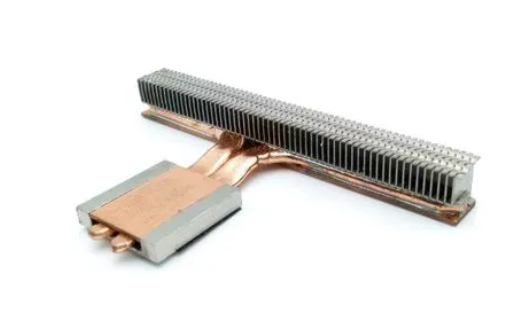
1. Introduction
As the performances of electronic devices improve, the need for better thermal management techniques increases. Finding effective cooling methods has become a critical aspect of design, and for good reason. Heat pipe have become one of the most versatile and effective heat transfer technologies available today.
Heat pipe are compact and offer excellent thermal dissipation. This characteristic has led to their adoption in many industries such as electronics, data centers, electric vehicles, and industrial equipment.
Bangwin Machine offers state-of-the-art manufacturing systems for both heat pipe and other thermal solutions.
👉 Learn more about thermal manufacturing technologies at https://thermalmachinery.com/.
2. What Are Heat Pipes?
A heat pipe is a highly efficient heat transfer device that is completely sealed. Heat may only be transferred to a different location along the length of the pipe.
The typical structure consists of
– a tube made of copper or aluminum,
– a wick structure,
– a working fluid,
– a vacuum.
When one the pipe absorbs heat, the working fluid in that section may evaporate. The vapor travels along the length of the pipe to the section that is cooler. Here, the vapor condenses and in doing so, releases heat. The wick structure then moves the liquid back to the section that has evaporated.
This cyclic process occurs without the need for any external power source. This process also allows heat pipe to transfer thermal energy to a greater extent than solid metal conductors.
3. How Heat Pipes Work
The operation of heat pipes consists of four basic processes.
- Step 1: Heat Absorption
The evaporator section absorbs heat.
- Step 2: Vapor Formation
The working fluid rapidly evaporates.
- Step 3: Heat Transfer
The vapor travels through the chamber.
- Step 4: Condensation and Return
The vapor condenses and releases heat.
Next, the wick structure retrieves the fluid. Thus, a constant thermal cycle is established.
4. Main Types of Heat Pipes
There are multiple designs that fit the varying needs of a heat pipe.
- Standard Heat Pipes
This type is used in the cooling of laptops, servers, and industrial machinery.
- Sintered Heat Pipes
These pipes are used in high-performance electronics since they provide superb capillary performance.
- Grooved Heat Pipes
Grooved pipes have a simpler design and structure, and that results in a lower production cost.
- Vapor Chambers
Vapor chambers are useful when heat needs to be spread at a larger surface area. For high-tech cooling needs, heat pipe combined with 【Vapor Chamber Production Line】 technology, are used.
- Loop Heat Pipes
Loop heat pipe are designed for use in high-power and aerospace applications.
5. Benefits of Heat Pipes
There are a multitude of advantages to using heat pipe.
- Superior Thermal Conductivity
Heat pipe have a high thermal conductivity and can transfer heat very rapidly.
- Passive Operation
There is nothing extra needed for them to work, so they can operate on their own.
- Lightweight Design
Heat pipe can be designed to be lightweight and can be built into smaller products.
- High Reliability
They can work for a long time and are designed to work with little maintenance.
- Long Service Life
Heat pipe are built to last for many years, so industries have started to implement heat pipes more and more.
6. Heat Pipe Manufacturing Process
The manufacturing of heat pipe requires a high level of precision for both the equipment and processes.
First, copper pipe blanks are prepared by the manufacturer.
Next, systems are used to clean the blanks and remove surface contaminants.
Then, the wick structure is assembled into the copper pipes.
Next, the pipes are sintered to provide the capillary structure with additional strength.
After that, air and moisture are removed by the vacuum process.
For this, manufacturers will use 【Primary Degassing Machine】for the first step of vacuum preparation.
The next step of preparing a vacuum to an even greater extent will be done with the 【Secondary Degassing Machine】
For high-volume manufacturing, the 【Six-Station Vacuum Degassing Machine】is often used.
After a vacuum treatment, operators inject the working fluid. Subsequently, sealing equipment permanently closes the heat pipe. Finally, testing systems assess the pipe’s performance and check for leaks.
Modern factories often have an entire 【Heat Pipe Production Line】to enhance the efficiency of production.
7. Applications of Heat Pipes
Heat pipe have applications in numerous industries.
- Consumer Electronics
Heat pipe are found in gaming laptops, desktop computers, smartphones, and tablets.
- Artificial Intelligence Servers
With AI systems generating a lot of heat, advanced cooling systems become a requirement.
- Data Centers
AI systems generate a lot of heat. Therefore, advanced cooling systems become a requirement.
- Electric Vehicles
Manufacturers use heat pipe to improve the cooling systems of batteries. They also improve the thermal stability of the battery and prolong the battery lifespan.
- Industrial Equipment
Power electronics require reliable heat dissipation. Hence, there are heat pipe to help with this.
- Renewable Energy Systems
Heat pipes help in improving the conversion efficiency of energy and can be used in solar applications and energy storage.
8. Why Heat Pipes Are Essential for Modern Electronics
Power density in electronics is on the rise, while the size of electronic devices is on the decline. Due to this, traditional cooling methods are no longer applicable.
Heat pipes can transfer a massive quantity of heat over a small distance. They can also help enhance the reliability of the product. For this reason, many modern tech companies are adopting heat pipe based cooling systems.
The rapid expansion of AI computing is also driving the demand for more cooling systems.
9. Why Choose Bangwin Machine
Bangwin Machine specializes in thermal manufacturing equipment and turnkey production systems.
Our offering includes:
Thermal pipe production line
Vacuum Degas systems
Automated assembly systems
Tailored thermal engineering systems
In addition, Bangwin Machine provides worldwide technical support with installation.
For further details, check out https://thermalmachinery.com/
- For more industrial manufacturing insights:https://thermalmachinery.com/
10. FAQ
- What exactly are heat pipes?
They are used to transfer heat quickly and efficiently within various elements of electronics, data centers, EVs, and industrial systems.
- Why are heat pipes better than solid metal conductors?
Heat pipes utilize phase-change technology, making them better at transferring heat.
- What are heat pipes usually made of?
Copper and aluminum.
- Do you need electricity to run heat pipes?
No. Heat pipes run on their own.
- What do you need in order to manufacture heat pipes?
You need a system to clean them, sintering systems, a vacuum degas, a filling system, a sealing system, and finally a testing system.
11. Conclusion
Heat pipes have established themselves as a powerful tool in thermal management technology.
They have become the preferred solution as they offer a high level of heat transfer in a small package.
With the high level of thermal management in modern systems such as AI computing, EVs, and data centers, the demand for heat pipes will continue to grow.
Bangwin Machine has manufacturing solutions to ensure customers are able to make high quality heat pipes in an efficient and effective manner.
To find out more, check out https://thermalmachinery.com/ for quality heat pipe manufacturing tools and ready to use production systems.