
1. Introduction
Manufacturers need precise forming equipment and careful process control to produce fin tubes efficiently.
As a result, they typically rely on specialized equipment to produce finned tubes continuously.
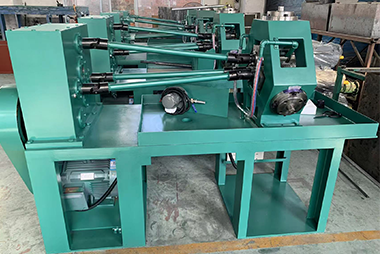
An Extruded Fin Tube Machine produces external fins on a base tube.
Mechanical forming creates a rigid bond between the tube and fin material.
Produced fin tubes feature precise dimensions with consistent thermal performance.
Popular extruded fin tube materials include aluminium for the outside fins.
Producers can choose from various materials for the base tube section.
These materials can include carbon steel, stainless steel, copper, alloy steel, and more.
As a result, extruded fin tube machines support a wide range of industrial heat transfer applications.
At Bangwin Thermal, we supply industrial fin tube machines and custom heat exchangers.
Bangwin Thermal is a professional supplier of fin tube equipment and heat exchangers.
2. What Is an Extruded Fin Tube Machine?
An Extruded Fin Tube Machine is a production machine designed to create extruded finned tubes.
The machine applies mechanical forming to create external fins around a tube.
As a result, this process creates a mechanical bond between the fin and tube.
The machine takes a bare tube and an aluminium sleeve or outer layer of material.
Then, the forming tools squeeze the material around the tube.
Finally, special tooling shapes continuous external fins around the tube.
The result of this process includes:
- Increased heat transfer surface area
- Enhanced fin strength where it attaches to the tube
- Good thermal contact between the tube and fins
- Precise fin geometry
- Suitable mechanical stiffness
As a result, manufacturers can use extruded fin tube production for many heat exchanger applications.
3. How an Extruded Fin Tube Machine Works
This type of production machine uses controlled mechanical forming to create fin tubes.
First, the process loads a bare tube into the machine.
Next, the aluminium sleeve or other fin material goes around the tube.
Then, the forming tools press against the outer fin material.
The tools shape the aluminium into a continuous set of fins.
The forming action also creates tight contact between the tube and fins.
As a result, heat can easily conduct from the tube into the fins.
The machine can control several key production parameters:
- Tube speed
- Pressure during extrusion forming
- Fin height
- Fin spacing
- Fin thickness
- Base tube diameter
As a result, precise control creates consistent production quality.
4. Main Components of an Extruded Fin Tube Machine
These machines contain several important subsystems and components.
4.1 Tube Feeding System
This system feeds the base tube into the forming system.
As a result, the system ensures steady tube movement during forming.
Careful control of the tube feeding helps ensure the correct fin dimensions.
4.2 Fin Material Feeding System
This system feeds the aluminium sleeve or other fin material.
As a result, it allows the material to reach the forming area.
Consistent feeding of the fin material allows for stable fin formation.
4.3 Extrusion Forming Unit
The extrusion forming unit creates the external fins.
It pushes on the fin material with precisely controlled force.
As a result, the forming unit defines the final shape of the fins.
4.4 Forming Tooling
The tooling defines the dimensions and shape of the extruded fins.
Important dimensions include:
- Fin height
- Fin spacing
- Fin thickness
- Fin profile shape
- Outer diameter
As a result, manufacturers can change the tooling to create different products.
4.5 Drive System
The drive system controls how the tube moves through the machine.
As a result, a stable feed speed helps the production process stay consistent.
Many modern machines use servo drives or other precise control technologies.
4.6 Control System
The control system operates the fin tube machine.
The system can monitor parameter values and operating conditions.
As a result, operators can ensure the machine runs with consistent settings.
4.7 Cutting and Finishing System
The system can cut the formed tubes to set lengths after forming.
As a result, they prepare finished tubes for installation into heat exchangers.
5. Extruded Fin Tube Production Process
Fin tube production typically consists of several steps.
5.1 Base Tube Selection
First, producers need to choose a proper base tube.
They must consider factors such as:
- Material
- Diameter
- Wall thickness
- Length
- Working pressure
- Operating temperature
As a result, the base tube should match the intended heat exchanger application.
5.2 Tube Preparation
Next, the producer cleans and checks the outer surface of the tube.
Preparing a clean surface allows the forming process to stay consistent.
As a result, preparing the tube helps ensure stable production rates.
5.3 Aluminium Material Installation
Install the aluminium sleeve over the base tube.
The sleeve becomes the material for the external fins.
As a result, it should match the desired dimensions for production.
5.4 Extrusion Forming
Next, the machine applies controlled pressure to form the fins.
The forming tools press against the aluminium to make continuous fins.
As a result, this process defines the final fin geometry.
5.5 Fin Dimension Control
Manufacturers can measure and control several fin dimensions:
- Fin height
- Fin pitch
- Fin thickness
- Tube diameter
- Outer diameter
As a result, controlling these dimensions creates consistent fins and tubes.
5.6 Tube Cutting
Once the machine finishes forming fins on the tube, it cuts the tube to length.
As a result, manufacturers can install the finished tubes into heat exchangers.
5.7 Quality Inspection
Finally, producers inspect the finished extruded fin tubes for quality.
They may measure:
- Fin dimensions
- Tube dimensions
- Fin attachment strength
- Surface condition
- Tube straightness
As a result, producers can ensure consistent product quality through inspections.
6. Advantages of an Extruded Fin Tube Machine
An Extruded Fin Tube Machine offers various benefits during production.
6.1 Consistent Fin Geometry
Production tooling allows the machine to control fin dimensions.
As a result, it can produce fin tubes with matching fin height and pitch every time.
6.2 Strong Fin- to-Tube Connection
The forming process creates solid metal-to-metal contact.
As a result, the finished tube offers an efficient thermal conductivity path.
The close connection also offers better mechanical strength.
6.3 Continuous Production
A continuous fin tube machine can create fins along the entire length of the tube.
As a result, producers can realize high production efficiency.
This benefit allows manufacturers to meet high-volume production demands.
6.4 Flexible Product Specifications
Manufacturers can change the forming tools and machine parameters.
As a result, producers can make fin tubes with different fin heights and pitches.
They can also make tubes with different diameters.
6.5 High Surface Area
The extrusion forming process creates external fins along the entire tube.
As a result, the finished tube offers a high surface area per unit volume.
6.6 Reduced Manual Operations
These machines use automated feeding and forming operations.
As a result, there is less need for manual handling during production.
Manufacturers can realize more consistent production quality.
6.7 Suitable for Aluminium Fin Tubes
Aluminium offers low density and high thermal conductivity.
As a result, creating extruded fin tubes works very well with aluminium fins.
7. Extruded Fin Tube Machine Applications
Fin tube machines have applications across many industries.
7.1 Air Cooled Heat Exchangers
Air cooled heat exchangers need extensive external heat transfer surfaces.
As a result, manufacturers can use extruded fin tube heat exchangers.
Applications include:
- Process coolers
- Gas coolers
- Oil coolers
- Condensers
7.2 HVAC Equipment
HVAC applications need good heat transfer on the air side.
As a result, HVAC systems can use extruded fin tubes in heating and cooling coils.
These include:
- Air conditioners
- Heat pumps
- Air handling units
- Cooling units
7.3 Refrigeration Systems
Refrigeration equipment needs good heat transfer in condensers and evaporators.
As a result, they can use extruded fin tube heat exchangers.
7.4 Industrial Oil Coolers
Oil cooler systems need to effectively reject heat to the air.
As a result, finned tubes can dissipate heat from oil into air.
These applications include:
- Hydraulic systems
- Industrial equipment
- Lubrication systems
7.5 Petrochemical Equipment
Petrochemical applications need reliable heat transfer equipment that works.
As a result, they can use extruded fin tube heat exchangers for air cooling.
Examples include:
- Cooling chemical process streams
- Gas cooling
- Heat recovery
- Condensing vapors
8.Extruded Fin Tube Machine Buying Guide
There are several factors that manufacturers should consider before buying equipment.
8.1 Required Tube Diameter
Different machines are capable of working with different tube diameters.
As a result, manufacturers should ensure the equipment can produce their desired tube diameter.
8.2 Required Fin Height
Fin height will vary the surface area of the final heat exchanger.
As such, manufacturers should ensure the equipment can produce their required fin height.
8.3 Fin Pitch
Pitch is the measurement of spacing between two adjacent fins.
Pitch will affect heat transfer as well as airflow resistance.
8.4 Desired Production Speed
Production speed will determine your overall production capacity.
As such, manufacturers should identify how much they want to produce per unit of time before buying equipment.
8.5 Material Considerations
Ensure the extruded fin tube machine works with your intended fin material.
Aluminium is the most common fin material for extruded fin tubes.
8.6 Level of Automation
Manufacturers have different needs when it comes to automation.
Manual systems can work but may require more operator attention.
On the other hand, automated systems may limit the amount of manual work required.
As such, machines should be selected based on production volume and labor availability.
9.Comparison of Extruded Fin Tube Machine to Other Machines
Not all fin tube machines are created equally. Machines use different technologies to produce fin tubes.
Machine Type | Fin Attachment | Main Advantage | Typical Application |
Extruded Fin Tube Machine | Mechanical extrusion | Strong contact | Air coolers |
High Frequency Fin Tube Machine | HF welding | Strong weld | Industrial heat exchangers |
Laser Fin Tube Welding Machine | Laser welding | Precise welding | High-performance tubes |
Spiral Fin Tube Machine | Mechanical winding | Continuous production | Boilers and heat exchangers |
G Fin Tube Machine | Embedded fin | Strong mechanical bond | Industrial cooling |
As such, customers should select machines based on their end-product requirements.
High Frequency Welding Fin Tube Machine
Laser Fin Tube Welding Machine
10.How to Select the Right Extruded Fin Tube Machine
Selecting the right machine can be difficult. Consider the following points when choosing a machine.
10.1 Know Your Product Specs
First, know your tube outer diameter range.
After that, know your:
- Fin height
- Fin pitch
- Fin thickness
- Tube material
- Fin material
- Tube length
Knowing your specs will allow you to quickly narrow down which machines can accommodate your needs.
10.2 Know Your Required Production Capacity
Second, know your annual or monthly production output.
After that, you can determine your desired production speed.
High-volume manufacturers should consider machines with automatic feeding and controlling systems.
10.3 Consider Your Product Materials
Different materials have different forming conditions.
As a result, you should inquire with your chosen machine supplier about material compatibility.
10.4 Look for Tooling Flexibility
Some machines are more flexible than others.
If your production runs will change over time, look for machines with interchangeable tooling.
10.5 Look for Automation Functions
Automation will allow you to create more consistent products.
Look for machines with the following:
- Automatic feeding
- Servo control
- Digital setting of machine parameters
- Automatic cutter
- Production monitoring software
10.6 Inquire about After-Sales Support
After-sales support can make or break your production experience.
Look for the following after-sales support:
- On-site installation and commissioning support
- Operator training
- Available spare parts
- Technical support hotline
A good supplier will ensure your production line doesn’t stay down for long should an issue arise.
11. Why Should You Choose Us?
Bangwin Thermal specializes in industrial heat transfer equipment, fin tube and customized heat exchanger solutions.
Our knowledge of fin tubes allows us to work with a variety of fin tube technologies.
These include:
- Extruded fin tubes
- High frequency welded fin tubes
- Laser welded fin tubes
- Spiral welded fin tubes
- G fin tubes
- KL fin tubes
- Low fin tubes
- Serrated fin tubes
- Longitudinal finned tubes
- Copper finned tubes
We understand how fin tube manufacturing affects end heat exchanger performance.
As a result, we can guide customers to choose the right fin tube technology for their heat exchanger application.
Our engineering considerations include but are not limited to:
- Tube material
- Fin material
- Tube outer diameter
- Fin height
- Fin pitch
- Production capacity
- Operating temperature
- Heat transfer requirement
For customized industrial fin tube and heat exchanger solutions, please visit:
Bangwin Thermal Official Website
Bangwin Thermal also offers support for customized industrial heat exchanger requirements.
Customers can share their fin tube specifications with us to choose the best production solution.
12. FAQ
l What is an extruded fin tube machine?
An extruded fin tube machine mechanically forms continuous external fins on a base tube.
The result is a finned tube that has a larger surface area for heat transfer.
l What materials can be used on an extruded fin tube machine?
Most extruded fin tube machines are designed to process aluminum fin material.
Tubes can be made from steel, stainless steel, copper, or any material that the fin can adhere to.
l What are extruded fin tubes used for?
Extruded fin tubes are commonly used for air cooled heat exchangers, HVAC equipment, refrigeration units, oil coolers, and industrial process cooling applications.
l How does an extruded fin tube machine work?
An extruded fin tube machine uses precise mechanical forming to create fins.
Tools and fixture shape the fin material around the outer diameter of the tube to create continuous fins.
l What are the advantages of extruded fin tubes?
Benefits of extruded fins include strong mechanical contact between the fin and tube.
This creates an efficient thermal connection without needing to weld the fin to the tube.
l Can an extruded fin tube machine produce multiple fin sizes?
Depends on the machine.
Some allow you to change out tooling to allow for different production specifications.
Make sure to verify what range of diameters and fins your desired machine is capable of handling.
l What factors should I consider before purchasing an extruded fin tube machine?
You should consider your tube diameters, fin heights, fin pitches, materials, desired production speed, level of automation, tooling capabilities, and after-sales support.
l Can Bangwin Thermal help me with customized fin tube production?
Yes!
At Bangwin Thermal, we can discuss your custom fin tube requirements and provide suitable heat exchanger solutions.
13. Conclusion
An Extruded Fin Tube Machine is a method of creating high-performance finned tubes.
These machines allow manufacturers to quickly create tubes with larger heat transfer areas.
Due to the mechanical bonding between the fin and tube, contact allows for strong thermal connections.
Manufacturers should understand their equipment needs and research machines before buying.
Bangwin Thermal is here to help you navigate customized fin tube equipment and industrial heat exchanger solutions.